Soulful Work
As AI automates more of our work, what happens to the experiences through which we develop judgment, expertise and a sense of purpose?
What happens when we automate the activities that make work meaningful?
We are racing to adopt artificial intelligence, and increasingly that means racing to automate work. The business case is strong: greater productivity, lower costs, new capabilities, better products and services. For organizations that get it right, the rewards could be enormous. Entire business models are being reconsidered, from how services are priced to what customers will pay for work that takes hours instead of days. Value in many companies is shifting toward judgment, verification, orchestration and infrastructure, and away from the messy middle of getting things done.
But in our enthusiasm for AI, we risk diminishing some of the very experiences we’ve spent decades trying to build work cultures around. Work is where, ideally, we experience creativity, accomplishment, belonging and a sense of purpose. We find meaning in the act of doing things, sometimes precisely because they’re difficult. The struggle to understand a problem, the pleasure of making something, the satisfaction of becoming good at a craft. Most of it happens right in the messy middle. These experiences help people develop confidence, identity and a sense of their own value.
In my career, I’ve learned how closely the experience of work is connected to the quality of what people produce, their loyalty to an organization, and whether they find pride and satisfaction in what they do. Our firm is often engaged to help leaders understand their teams as they contemplate future strategies. When the relationship between work practices, work culture and leadership changes all at once, the consequences can be felt everywhere, most importantly in the work itself.
What was all that progress for?
In 1974, Studs Terkel published Working, an extraordinary collection of interviews with people about what they did all day and how they felt about doing it. I love this book. Its opening sentence is unforgettable:
“This book, being about work, is, by its very nature, about violence—to the spirit as well as to the body.”
Terkel, an oral historian, documented physical exhaustion, indignity, monotony and the daily humiliations of earning a living. His book is timeless because it is as much about the human condition as the working conditions of its era. Work can diminish people, and it can be among the most important ways we express who we are. I’ve been spared the hardships he documented, thanks largely to being a North American Gen Xer and to a white-collar career. The closest I came was a dark cubicle with my name on it in the sub-basement of a government building, circa 2000. Hardly the same thing.
For much of the past 200 years, improving work has been part of the larger project of improving human life. Labour movements, technological advances, education and social reforms have sought to make work safer, less physically demanding, more equitable and more rewarding. Millions of people still endure conditions Terkel would recognize, and contemplating the spiritual dimensions of work is a luxury many do not have. All the more reason, I think, for work to offer some measure of humanity.
Particularly in affluent liberal democracies and the knowledge economy, and for most people reading these words, our expectations of work have expanded. As work became less physical and more digital, there was more room to think about meaning at work. We talk about bringing our whole selves to work, finding purpose, developing our talents, belonging to something and becoming the best versions of ourselves. Organizations have built cultures around those expectations, recognizing that trust, engagement and belonging contribute to better work and stronger organizations.
And with remarkable speed, we’re developing systems capable of performing many of the activities through which people experience precisely those things. Couple this with the sobering thought that, given the pace of development, the AI we use today may be the least capable we’ll ever use.
Even today, I can generate a strategy in seconds. It wouldn’t necessarily be right, or one I’d want to put my name on, but it would exist, and that was not true before. A designer can produce dozens of concepts before lunch. A researcher can synthesize volumes of material in minutes. I can simulate a conversation with Peter Drucker or Brené Brown, drawing on their extensive bodies of published work.
But isn’t this also work that many people love doing? And when we take it away, what replaces it?
The soul of the matter
Irish poet and philosopher John O’Donohue wrote extensively about work and the inner life. In Anam Cara and other works, he explored how people can become prisoners of their professional identities, and how an obsession with function, measurement and productivity can diminish the human spirit.
O’Donohue was concerned that people could become so occupied with what they produce and accomplish that they lose contact with their creativity, imagination and capacity for wonder. He warned against functionalism, the tendency to understand human beings primarily through what they do and the functions they perform. I’m not a religious person, and I don’t need to be one to find his language of the soul useful.
His perspective dates to the late 1990s, much as Terkel’s dates to the 1970s, but the concern is remarkably contemporary. From Mary Shelley to Margaret Atwood, writers have long warned about what happens when our inventions change our relationship with being human. O’Donohue brings that concern directly into the experience of work.
Of course, we depend on measuring what matters. But when AI can capture, mimic and reproduce so much of what we do, O’Donohue’s warning about functionalism becomes a useful counterweight to treating knowledge work as a series of transactions to be optimized. Even though some of it assuredly is, a lot of it is not. Particularly work that depends on human agency, human insight, and giving a damn.
If you’re fortunate enough to enjoy your work, you know the feeling. From the coder to the carpenter, the accountant to the nurse, there are moments of complete absorption when the work feels distinctly yours, when effort and ability come together and produce something worth your pride, and the story you plan to tell someone at home.
The experience of catching this feeling is often how expertise develops. Good judgment is hard-won, through difficult decisions, mistakes, repetition and the occasional epiphany that stays with you precisely because you had to work so hard to reach it.
AI can smooth out friction, including some that people actually want. Much of it is the messy middle the business case would like to remove, and it is also where judgment gets created. AI can produce something good enough before we’ve learned what great looks like. In my own work, and in what I’ve seen of others orchestrating AI exceptionally well, the best results come from people with the expertise to judge them and the patience to give the system the context it needs. Both come from experience, from talking to the person next to you, and from working in cultures where learning and vulnerability are encouraged.
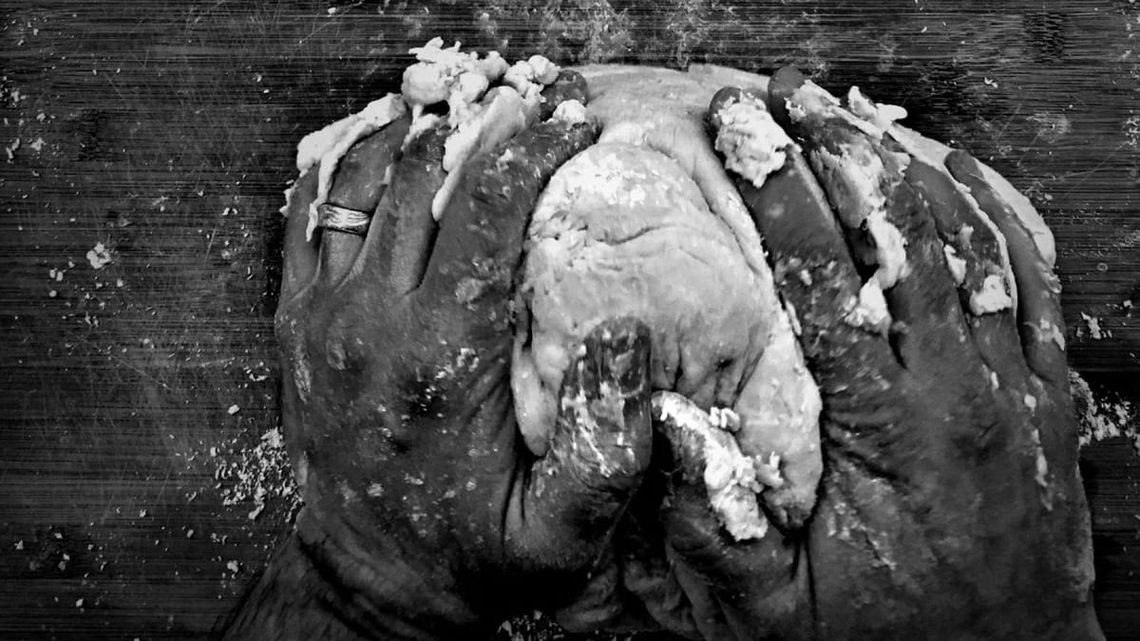
I have three children (adults!) at university, each pursuing a different field in the knowledge economy, and I think about this quite a bit. They’re preparing for careers in a world where AI will already be capable of performing many of the tasks through which earlier generations learned their professions. I see similar concerns in my work at NATIONAL Public Relations, where I help organizations and their leaders with strategic planning, change communications, AI adoption and other things. Increasingly, these questions are part of deciding what an organization wants to become. How will people become good at work they may never have to do themselves? How will they discover talents they’ve never had the opportunity to exercise? And how do we expect someone to care deeply about the bread if they’ve never kneaded the dough?
The productivity trap
Most of my experience with AI has been deeply empowering. I truly love what it has made possible, particularly the ability to create things that once required skills, time or resources I didn’t have, though I knew enough to judge the results. AI can remove barriers between what people imagine and what they can accomplish. And I’m certainly not interested in preserving drudgery. Repetitive administration, tedious analysis, endless formatting and bureaucratic processes that consume the better part of a working day. Good riddance.
Alongside the questions of ethos and culture, AI adoption raises a commercial one: what should an organization do with the capacity it frees up? One option is to capture that capacity as more output with fewer people, which is a legitimate commercial choice. Another is to spend some of it on new services, on ideas, and on helping people learn work they could not previously do. I believe, and have seen, that people find real satisfaction in that second kind of work. Earning their buy-in to put that capacity to new use is a culture and leadership challenge as well.
Both uses of that capacity can coexist, but they depend on choices about what an organization wants to become. If automation becomes an objective in itself, the risk is a workplace where people increasingly supervise machines while surrendering much of the experience of working. At the far end of that path is the WALL-E version: we direct systems, approve their outputs, enjoy smoothies and gradually forget how to do anything ourselves.
For knowledge work that depends on insight, creativity and judgment, that path could become a competitive problem as well as a human one. Organizations using similar technologies to produce similar outputs may drift toward sameness, however varied the individual outputs may be. The qualities that make a business distinctive become harder to sustain if the activities that develop them are steadily automated.
We could make work far more efficient while diminishing what makes an organization interesting, distinctive and worth belonging to.
Preserving human agency
It is for these reasons that I believe preserving human agency should be a central ambition of AI adoption.
I like the concept of onlyness, coined by Nilofer Merchant: the distinctive perspective each person brings to the world. I’ve used an exercise inspired by this in strategy workshops, asking people to identify what makes themselves or their business first, best or only. The underlying question is one of uniqueness and at its heart competitive: what can you contribute that others cannot easily reproduce?
It’s a useful question to consider alongside the prevailing vocabulary of AI adoption within knowledge work in 2026: human judgment, oversight, accountability and checkpoints where people review, approve and intervene.
These are all essential safeguards. But checking the work of a machine, even when the process is well orchestrated, can leave us all in quality control. By itself, it’s a limited ambition for human work. AI can expand creativity and curiosity, and it can diminish them. What matters is whether people still have room to exercise those qualities.
Agency means having meaningful influence over what we do, how we do it, what we create and what we become capable of doing. It includes the freedom to decide when technology helps us and when we would rather do the work ourselves, but with all players pointed in more or less the same direction. It means recognizing that some work is worth doing for reasons that don’t appear on a productivity dashboard.
If we measure people chiefly by speed and volume, we are asking them to compete with machines at what machines do best. In knowledge work, or anything that relies on craft, an organization that supports human agency has something more attractive to offer than one that only wants your workflow.
The role of leaders
The responsibility for preserving agency cannot rest entirely with individuals. Organizations decide how work is structured, what gets rewarded and where people spend their time. Leaders set that direction under real pressure to produce more at lower cost, while also shaping culture, development and the way people work together.
Those pressures are substantive. But the choices leaders make about automation also determine what work their people do, and whether it gives them opportunities to grow, contribute and take pride in what they accomplish. That matters in digital knowledge work, where so much depends on people who understand what the company is trying to do and bring their time and energy to it creatively.
A culture built around human agency asks leaders to understand what people value about their work, what customers value in its delivery, and how AI can strengthen both. It also asks what happens to the experience of working together. When AI takes on the research, the first draft or the problem-solving that once brought colleagues around a table, where will people challenge one another, learn from one another and share the pride of making something? This is a problem we didn’t have five years ago, so the practices for handling it are still being invented. Leaders can decide which parts of the messy middle are worth keeping, and keep them on purpose. I’d start with the work through which people learn.
What is work for?
One promise of AI is that it can relieve people of enormous amounts of drudgery while making them capable of things they could previously only imagine. The danger is that, in pursuing those gains, we inadvertently remove some of the experiences that give work its meaning.
A less desirable future could emerge without most of us having a say in it. One workflow automated after another, until we discover that we’ve become extraordinarily efficient at producing work that fewer people find meaningful. The results could be excellent. The experience could still lack the purpose and soulfulness many of us seek.
What is work for, and what part of ourselves do we want to bring to it?
Questions of ethos, culture, meaning and philosophy, uncomfortable as they may be in business discussions, have a place alongside the calculations driving AI adoption. There is something soulful in the experience of making, learning, struggling and accomplishing things that matter to us. What organizations and leaders choose to preserve in work, how they choose to automate with AI, and the agency each of us exercises will shape what it feels like to spend a substantial part of our lives working.
I use essays like this one to work out ideas (see some listed below). At NATIONAL, I work with leaders and organizations on strategy, change, reputation, and complex challenges like AI adoption. Much of my recent work involves the choices explored in this essay: what to preserve in work culture, what to automate, and how to do it. If those questions are what you are thinking about in your organization, I’d be glad to talk.
Works Consulted
- Margaret Atwood. Primarily Oryx and Crake. A novel of corporate-driven genetic engineering and its human cost.
- Nilofer Merchant. The Power of Onlyness: Make Your Wild Ideas Mighty Enough to Dent the World.
- John O’Donohue. Anam Cara: A Book of Celtic Wisdom. 1997. His best-known book on the inner life with a section on work and meaning.
- Mary Shelley. Frankenstein; or, The Modern Prometheus. 1818. Is it any wonder that it was one of the most popular movies of 2025?
- Studs Terkel. Working: People Talk About What They Do All Day and How They Feel About What They Do. Pantheon Books, 1974. Yes, it’s 50+ years ago. Yes, it’s a great book about work.
Earlier writing about this topic
- AI Fluency and the New Surface of Work
- Something to Hold On To: The Imperative of Purpose in the Modern Workplace
- AI and Communications: Practice, Leadership, Careers, Adaptation
- Creating a New Work Culture
- AI and the Knowledge Economy
- Communication is How We Create Meaning
- What We Talk About When We Talk About Productivity