What We Talk About When We Talk About Productivity
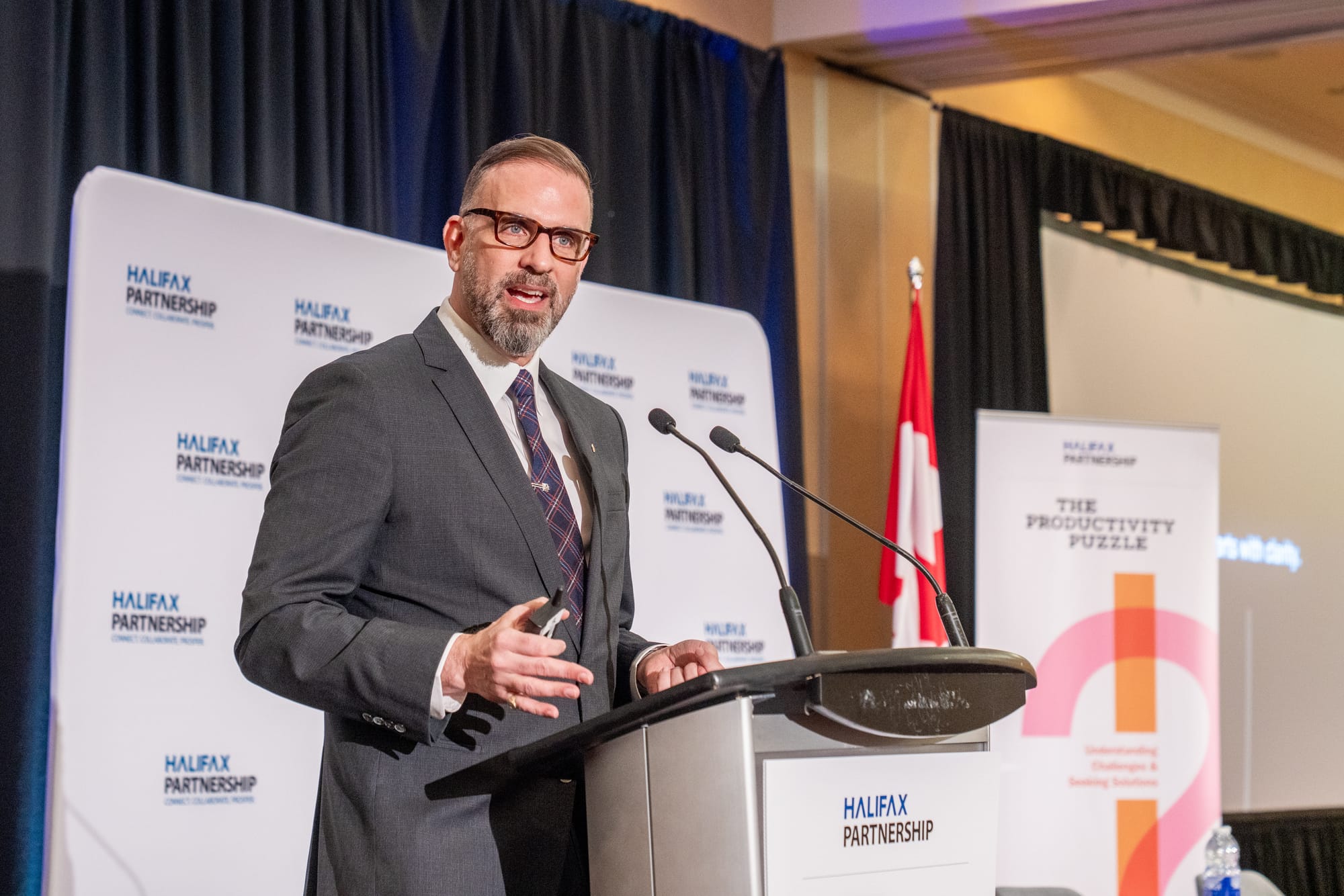
Reflection, January 2026: This was originally published in April of 2025, as business leaders in Nova Scotia gathered to discuss and strategize around the province's and Canada's long-standing, poor record on productivity. I had the opportunity to open the conference, and my remarks were a longer variation of this post. Thinking back, the series of events that this gathering kicked off have been extremely important for the province. I continue to believe that productivity is a perfect example of the kind of intractable problem that is easier to communicate about than to act on, even when the word means different things to different people. We have to start with at least some level of shared understanding in order to spur significant change.
Productivity is on everyone’s mind in Canada. We see it in business reports, we talk about it in boardrooms, we fret over it as a country. But it remains blurry – we are not all talking about the same thing when we talk about productivity.
NATIONAL, where I work, is full of curious people working on challenges like this. We analyzed how "productivity" appears across media, economic reports, and social conversations in Canada. What emerged was fascinating and revealing: how you talk about productivity changes depending on who you are talking to and what they care about.
- For everyday Canadians, productivity is deeply personal - it's about work-life balance and getting through your to-do list without burning out.
- For business leaders, it's about getting more output from teams, eliminating inefficiencies, and maximizing performance.
- For workforce analysts, it's about skills gaps, job satisfaction, and meaningful employment.
Three distinctive narratives emerge:
- The potential of AI: The emotional divide here is stark - either evangelistic optimism or anxious caution. The gap between "AI will save us" and "AI will replace us" is wide.
- Fixing interprovincial trade in Canada: "Productivity" has become synonymous with this issue. The prevailing emotion is pure frustration tinged with hope that we might finally address this self-inflicted wound. Nova Scotia Premier Tim Houston's leadership on this topic gives me genuine enthusiasm and optimism.
- Happiness and engagement at work: The recognition that productivity isn't about treating humans like machines, but linked to fostering connection, meaning, belonging to get to courage, ambition, and engagement.
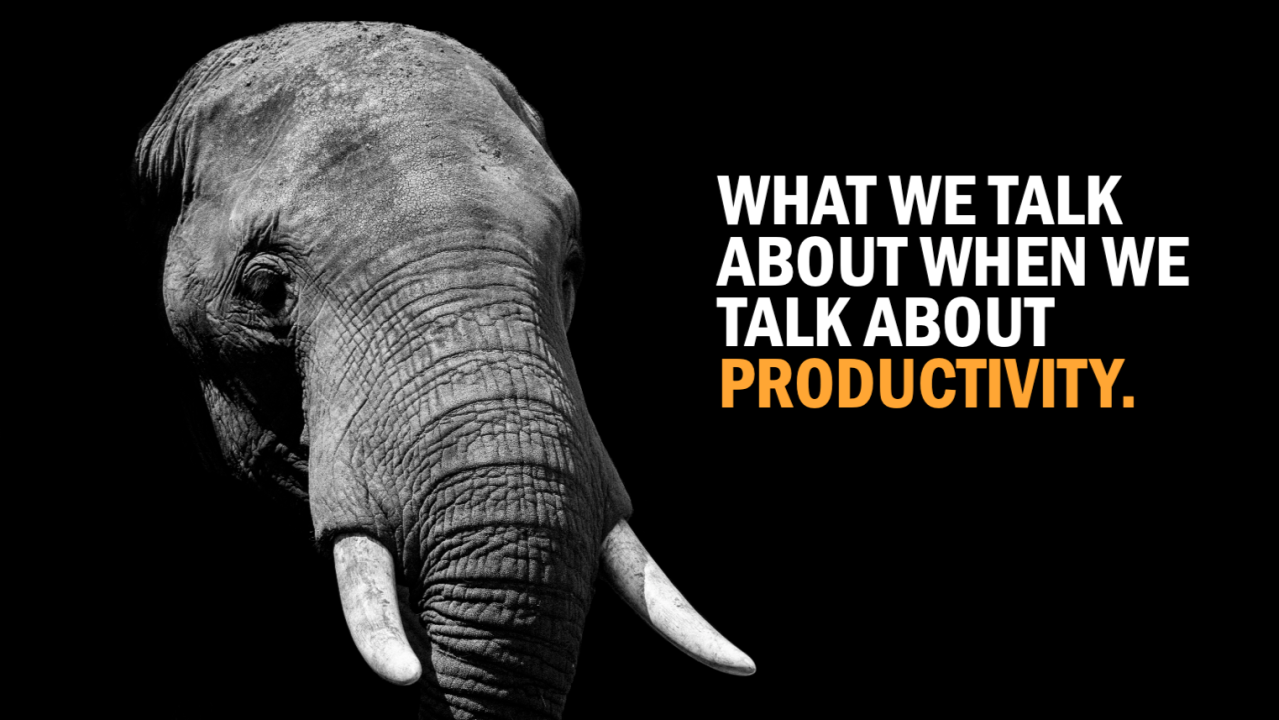
It’s like the proverbial elephant in a dark room. We’re all touching a part of the elephant, but none of us are getting the full picture. It’s not clear.
So, how do we move from blurriness to action? How do we crack the productivity puzzle?
Clarity is step one. Atlantic Canada has a proven track record of rallying around well-defined challenges - "Now or Never," "Ships Start Here," evolving our ocean economy, navigating a pandemic. When the challenge is clear and the story compelling, we have shown we can deliver.
It's time to pull this blurry concept into sharp focus.
We must answer the question for ourselves: what are we talking about when we talk about productivity?
And what are we going to do about it?
# # #
See also: Halifax Partnership’s Series on Productivity and Chief Economist Ian Munro's white paper, “The Productivity Puzzle: Understanding Challenges and Seeking Solutions.”
Originally published on Linkedin: https://www.linkedin.com/pulse/what-we-talk-when-productivity-kevin-mccann-fnl2e/